
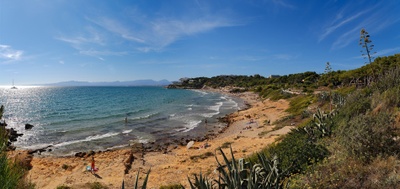
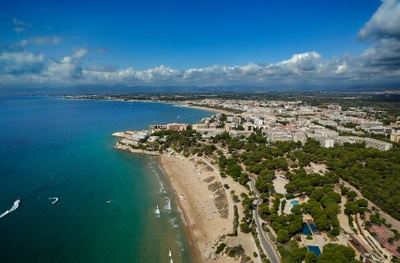









The sandbanks and dunes of Cap de Salou are natural formations created by the wind through the accumulation of sand behind the beaches. These areas form a fragile and distinctive Mediterranean coastal ecosystem of great landscape, geological and ecological value.
Over time, a significant proportion of these dune systems has disappeared or become partially covered by coastal development. Even so, several dune areas remain, often nestled among pine woods and Mediterranean scrubland that have gradually colonised these spaces. Notable examples include the dunes of Bosc Gran, Taurana, Talaia, Glorieta and Núria.
These dunes are particularly valuable because they preserve ancient sediments and support habitats adapted to extreme conditions of wind, salinity and water scarcity. The vegetation that grows here helps stabilise the sand and protect the coastline from erosion, while also providing shelter for numerous animal species.
The coastal area of Cap de Salou is considered one of the most distinctive natural spaces in Camp de Tarragona. Its dunes and beaches still retain a relatively natural character, something that is becoming increasingly rare along the Mediterranean coast. They stand as a living testament to the relationship between the sea, the wind and the coastal landscape.